Copy study · two films · two copies of each · 2,622 shots, frame for frame
What the Copy Forgets
The two Joker films, each read twice: from the small web file most people watch and from a 10-bit master twenty times its size, the same frame of every shot. The colour survives. What the web copy forgets is the texture of the dark, the fine steps between one shadow and the next, and every light brighter than an ordinary screen. And for one of the two films, the grade itself was done again.
What was measured
The two copies, frame for frame
Films. Joker (2019) · Joker: Folie à Deux (2024)
Web copies. 1080p x264, 8-bit, 2,100 and 1,341 kilobits a second
Masters. 2160p HEVC, 10-bit PQ HDR, 55.5 and 25.1 megabits a second
Shots. 1,302 and 1,320, the same frame in both copies
Region. the darkest part of the picture, L* 2–10, and everything above SDR white
Intervals. bootstrap over shots, 2,000 draws
The comparison
For 2,622 shots, the same frame was read from both copies of each film, and the web copies return exactly the numbers the earlier reports published.
The same frame, twice
Figure 1 · Drag the line: the same frame, both copies
The same crop of one frame: the 10-bit master left of the line, the 8-bit web copy right. "Dark lifted" stretches lightness 0–14 so the dark can be seen; "picture" shows it as displayed. The numbers read the dashed band around the line f...
What a file can say
Between near-black and dark grey, a web copy has 16 levels to work with and the masters 61 and 65. In a typical Joker frame that is about 6,400 different dark colours against 28,000.
Measured on: method.
Sixteen levels for the whole of the dark
Figure 2 · How many levels each file has for the dark
Every level a file can store between lightness 2 and 10, one tick each: the 8-bit web copy, each master at the brightness its web copy implies, and for reference 10-bit SDR and HDR read with white at 100 and at 203 nits. The label gives ...
Before any loss
Joker's web copy shows the master's shadows exactly as a 100-nit screen would. Folie à Deux's does not: it was given its own shadow curve, as if its master's white sat at 128 nits.
Measured on: paired census.
The web copy was graded again
Figure 3 · Where each web copy puts the master's light
For each lightness band of the web copy, the master's brightness that ends up there, written as the white it implies. A flat line at 100 is a web copy that shows the master as a 100-nit screen would; a slope is a curve of its own. Whiske...
The method
Made from the master with only the ordinary losses (1080p, 8 bits, halved colour and the web copies' own encoder settings), the rebuilt copies land within about 5% of the real ones on grain.
Rebuilding the web copy, one loss at a time
Figure 4 · The same shots, from the master down to the web copy
Each film's typical value over every paired shot, rung by rung. Master: the 10-bit file at the brightness its web copy implies. Then 1080p, 8 bits, halved colour, the web copy's own encoder at its own bitrate, and the real web copy. The ...
Loss one · texture
Joker's web copy keeps about two thirds of its master's fine texture in the dark. The missing third is taken by 1080p and by the encoder; the colour grain goes when the colour is halved.
Measured on: paired census + encoded sample.
The grain goes first
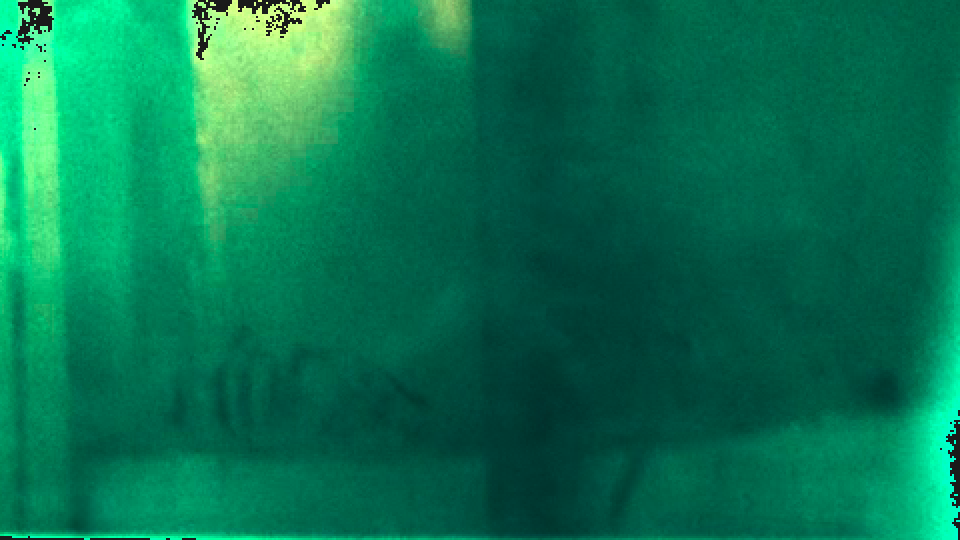
Joker, a dark wall at night · the picture
The grain goes first
Joker, the dark lifted · master
The grain goes first
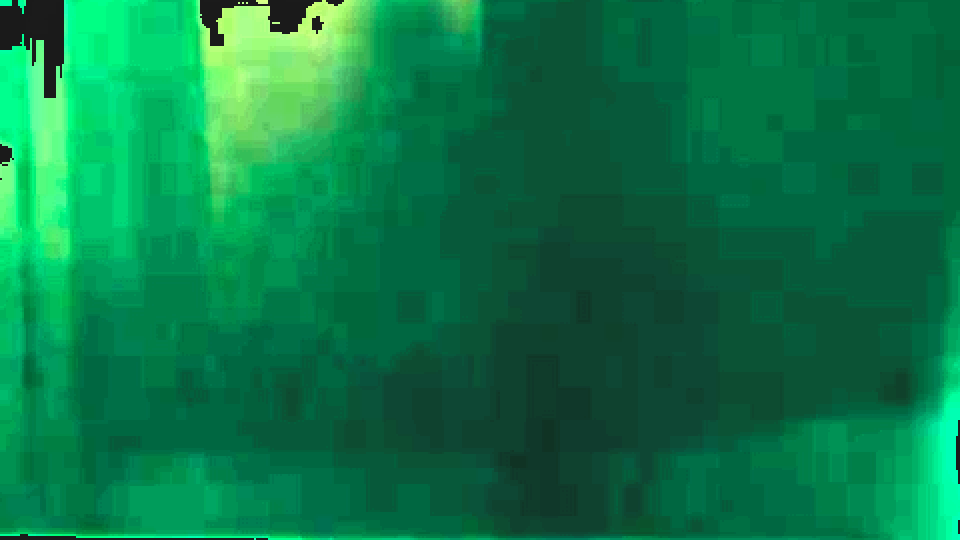
Joker, the dark lifted · web copy
The grain goes first
Joker: Folie à Deux, a green interior · the picture
The grain goes first
Joker: Folie à Deux, the dark lifted · master
The grain goes first
Joker: Folie à Deux, the dark lifted · web copy
The grain goes first
Figure 5 · What each step does to the grain
The typical change in fine grain from one rung to the next, over the same shots. Each bar is one kind of loss applied alone; the bottom row is the whole trip from master to real web copy. Whiskers: 95% interval.
Loss two · gradation
At 8 bits, 3% of dark pixels have two colour channels exactly equal, which almost never happens in the master. Where the colour of the dark changes slowly, the web copy draws it in patches.
The steps between one dark and the next
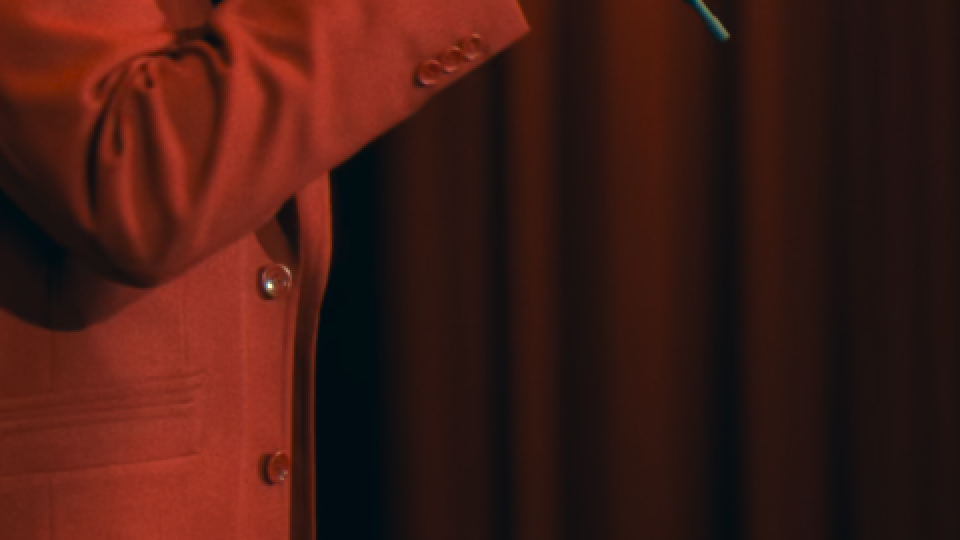
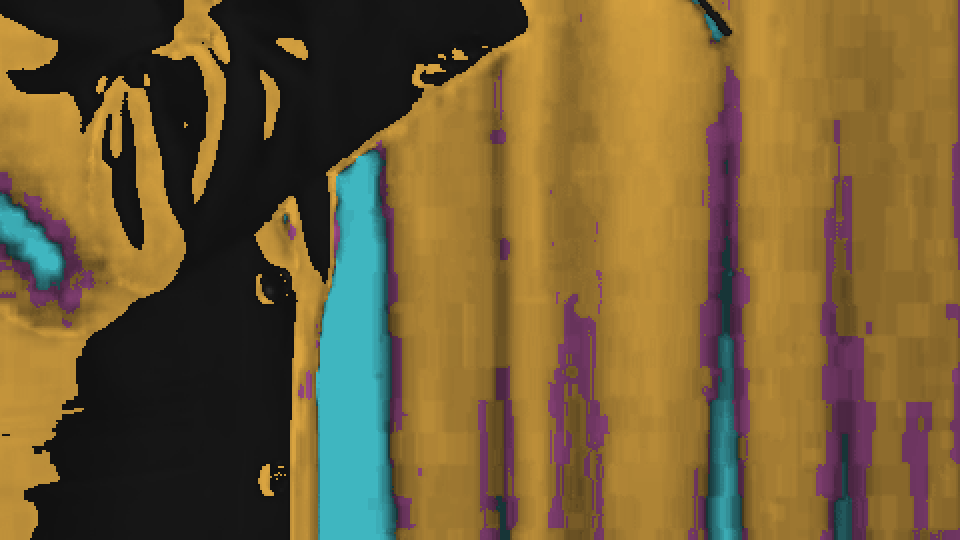
Joker: Folie à Deux, the red curtain · master
The steps between one dark and the next
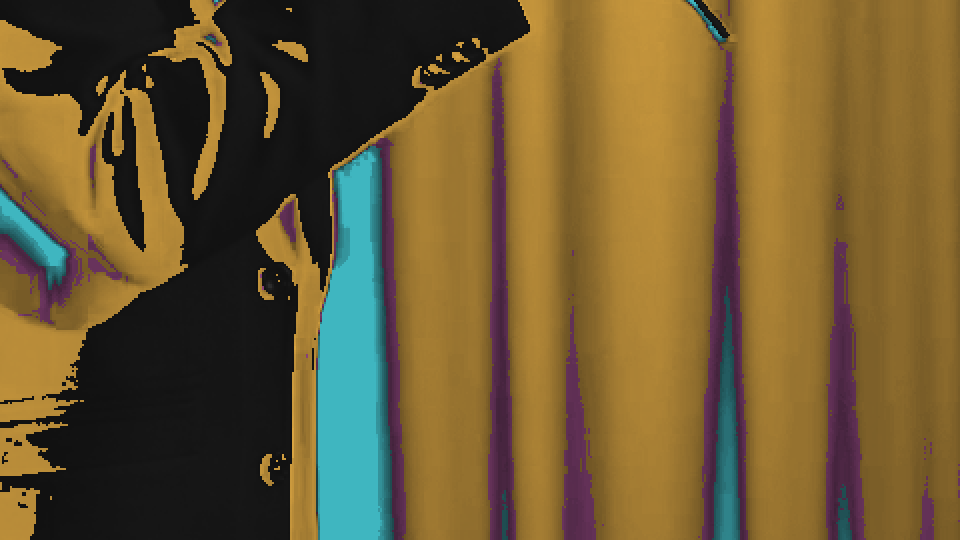
Joker: Folie à Deux, the red curtain · master, channels
The steps between one dark and the next
Joker: Folie à Deux, the red curtain · web copy, channels
Loss three · range
Half of Joker's shots and a quarter of Folie à Deux's hold light brighter than an ordinary screen's white, up to 976 nits; the web copy folds all of it down. The masters' extra colours matter much less in the dark.
Measured on: paired census.
Not a loss · the second grade
Compression leaves the colour of the dark almost exactly alone. What changes it is the second grade: Folie à Deux's web copy is yellower in the dark, its cyan turn ten degrees shallower and its vivid darks rarer.
Measured on: paired census + encoded sample.
The colour changes, but not where you would expect
Figure 6 · The same measure, down through the dark, in both copies
Dark pixels whose red channel is lowest, in each band of lightness from black upward, pooled over every paired shot. Solid line: the master. Open marks on a dotted line: the web copy. Hatched: the difference.
What stays
Which colour channel empties first in the dark, the core of both films' look, moves by under two points between master and web copy.
Measured on: paired census.
Side by side
Joker loses most of its difference to the file: grain. Folie à Deux loses most of its difference to the second grade: colour. Its master had already lost grain before this study began.
The answer
Watching a web copy of these films, you see their colour and their composition. You lose the surface of the dark, the fine steps between shadows and everything brighter than your screen's white. And for Folie à Deux you see a second grade.
Reference
Every technical term in the report, in plain words.
What would change it
How this was made, and what would change it
Every figure the prose quotes is declared with the path it came from in the measurements and re-checked when the report is built; a number that drifts stops the build. The encoder rung refuses to run unless a lossless encode through the same pipeline returns every frame exactly.