Colourist study · four films · 51-film control · 66,986 shots
The Colour of the Dark
Four films graded by Jill Bogdanowicz, read against every re-measured shot of 51 films. Their darks are not more colourful than cinema's. They are coloured by subtraction: one channel leaves the toe before the others, so black turns cyan, or in one film magenta, and reads as saturated without being chromatic.
New this week
Eight new studies of four films, and one colourist behind all four.
New this week
The eight new studies
Grade reconstruction · Skin at One Pole, Sky at the Other · The Aviator, its two-colour first 53 minutes
Grade reconstruction · Small Pools in a Black Room · The Bride!, its dark scenes
Grade reconstruction · The Colour Was Built Before the Camera · The Grand Budapest Hotel
Grade reconstruction · Sodium, Fluorescent and Greasepaint · Joker
Slide lab · Orange Satin, Ballroom Cyan and Marquee Bulbs · The Bride!, 36 frames
Slide lab · Sodium Amber, Stairwell Teal and Clown Red · Joker, 43 frames
Slide lab · Arkham Teal, Stage Orange and a Blue Moon · Joker: Folie à Deux, 31 frames
Slide lab · Mendl's Pink, Elevator Red and Lobby-Boy Purple · The Grand Budapest Hotel, 44 frames
What was measured
The corpus, and its floor
Corpus. 51 films · 66,986 analysis-eligible shots, every one re-measured
Subject. Joker, Joker: Folie à Deux, The Bride!, The Grand Budapest Hotel · 5,970 shots
Pixels. full resolution on a two-pixel stride · no resampling
Toe / mids. L* 2–10 against L* 25–55
Floor. ΔE00 0.13 and 0.45° between adjacent 8-bit toe colours; differences called only above ΔE00 2 and 7°
Intervals. bootstrap over films, 2,000 draws
Masters. Joker and Folie à Deux also read from 10-bit PQ masters, the same frame of every eligible shot
The question
"Coloured, oddly saturated shadows" can be measured three ways, and each needs the corpus to mean anything.
Cut one · how much
Only Folie à Deux keeps unusually much of its picture dark and coloured, and none of the four puts more chroma into its toe than the corpus.
Measured on: census.
Not more colour in the dark
Figure 1 · Cut one: how much of the dark is coloured
One dot per film, stacked where films crowd; the four studied here are inked and named, and the dashed hairline is the median film. Only Folie à Deux stands out on the first rule, and on the second three of the four sit inside the crowd....
Cut two · which way
Most films' shadows turn warmer than their midtones. The three Sher films' turn cooler, towards cyan; Folie à Deux turns furthest of any gamma-2.4 film.
Measured on: census.
The dark turns the other way
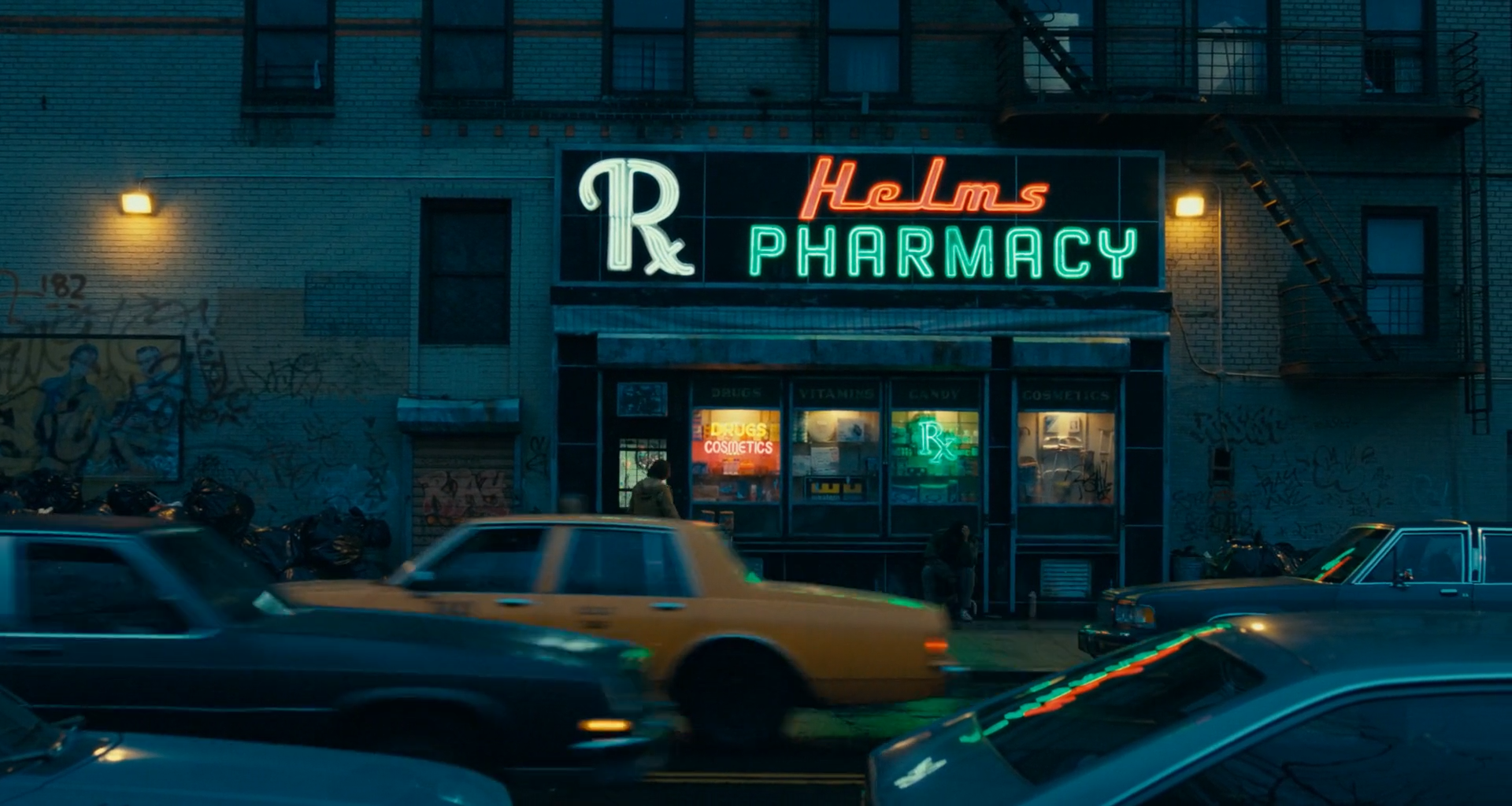
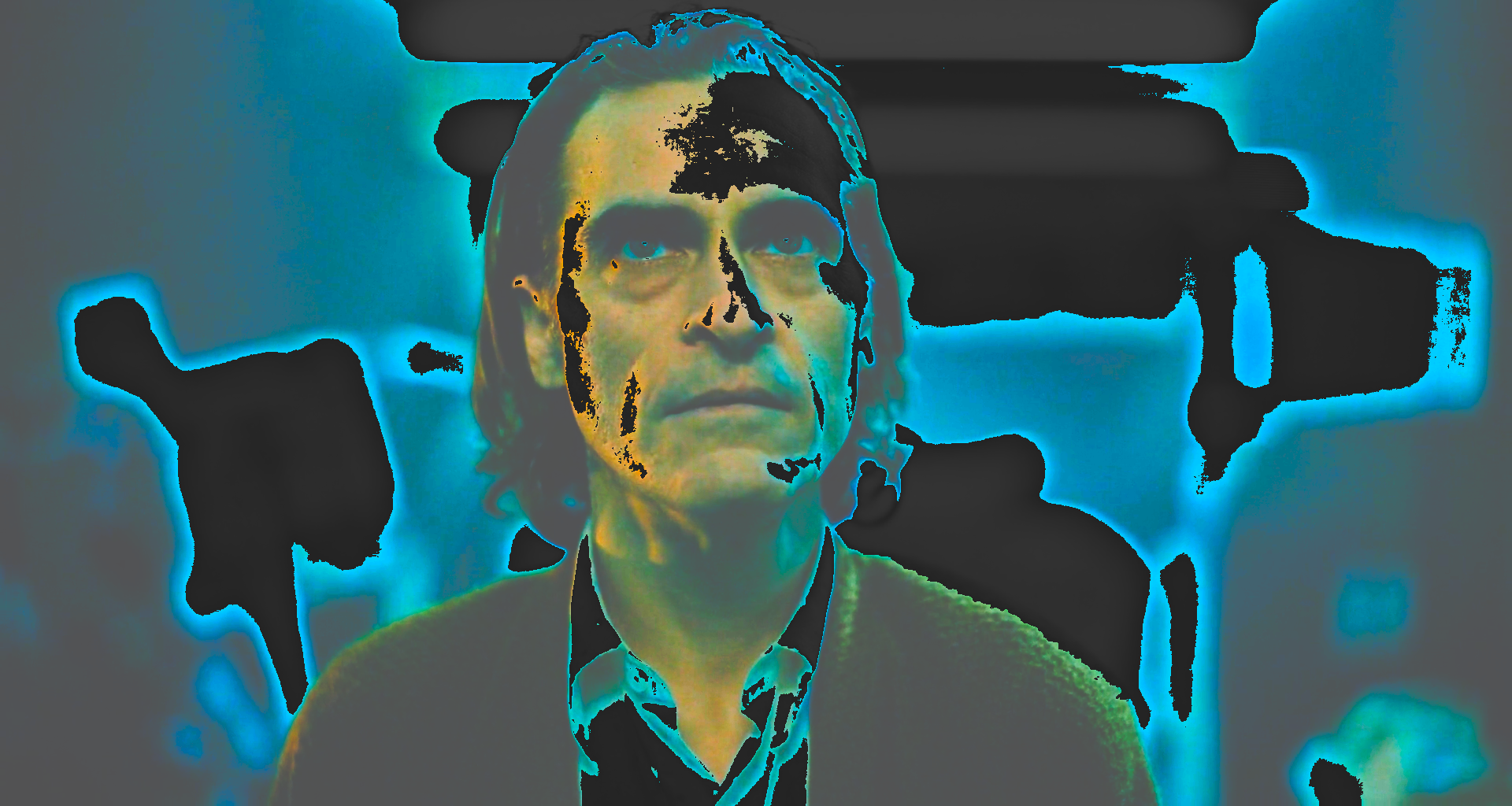
Helms Pharmacy at dusk — Joker, shot 113
The dark turns the other way
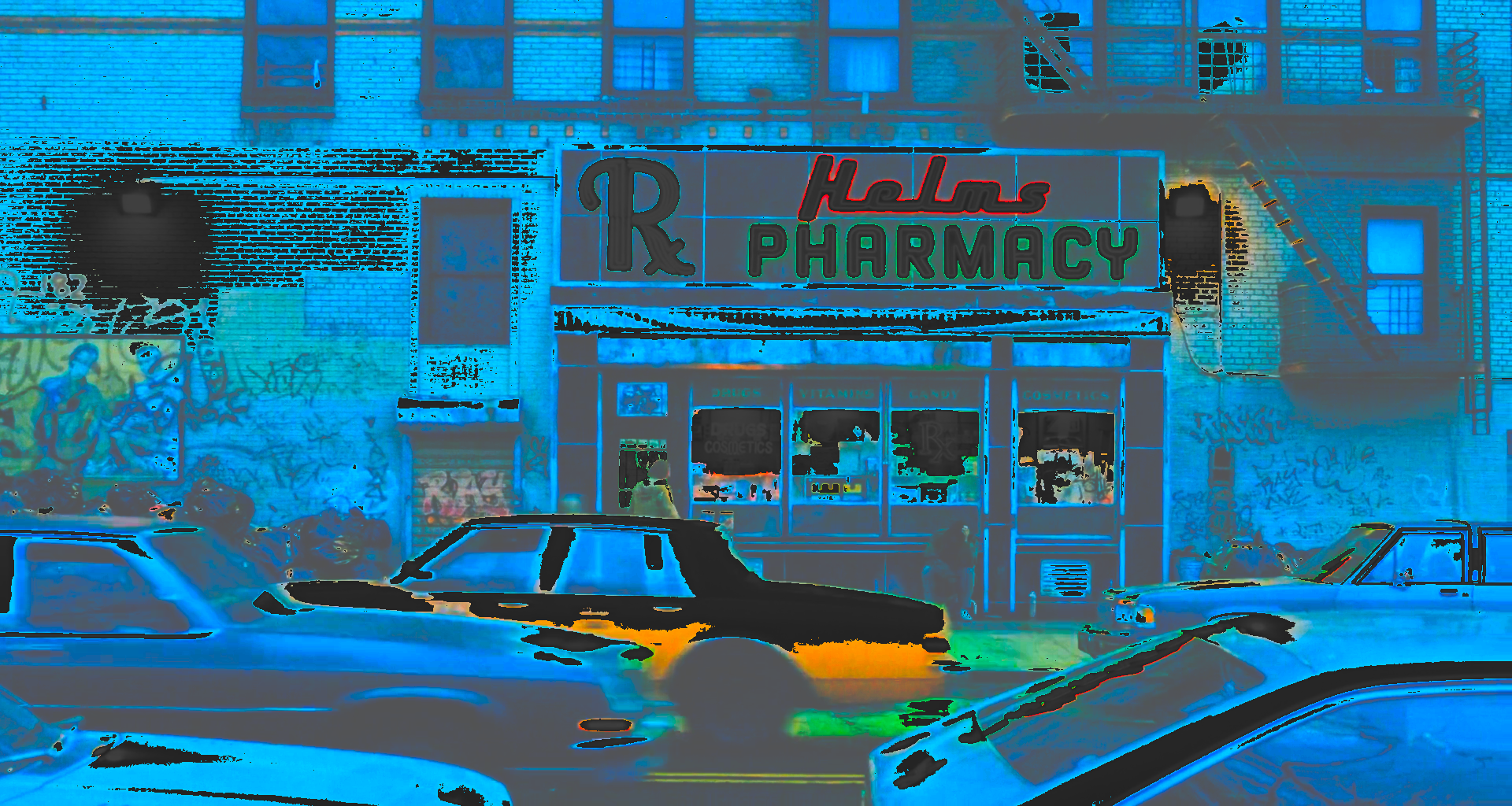
Helms Pharmacy, the dark lifted — Joker, shot 113
red lowest 97% · saturated toe 74%
The dark turns the other way
Figure 2 · Cut two: from which side each film's colour enters black
Each path is one film's mean colour, band by band, from its lightest band down to black where the axes cross; the crosses are the toes of the other 47 films. The median film comes down the warm side. Folie à Deux comes in from green-cyan...
Cut three · the mechanism
The look is one channel leaving first. In Folie à Deux the red code reaches black before green and blue, so dark pixels sit near a single hue: saturated, at ordinary chroma.
Measured on: census.
Saturated by subtraction
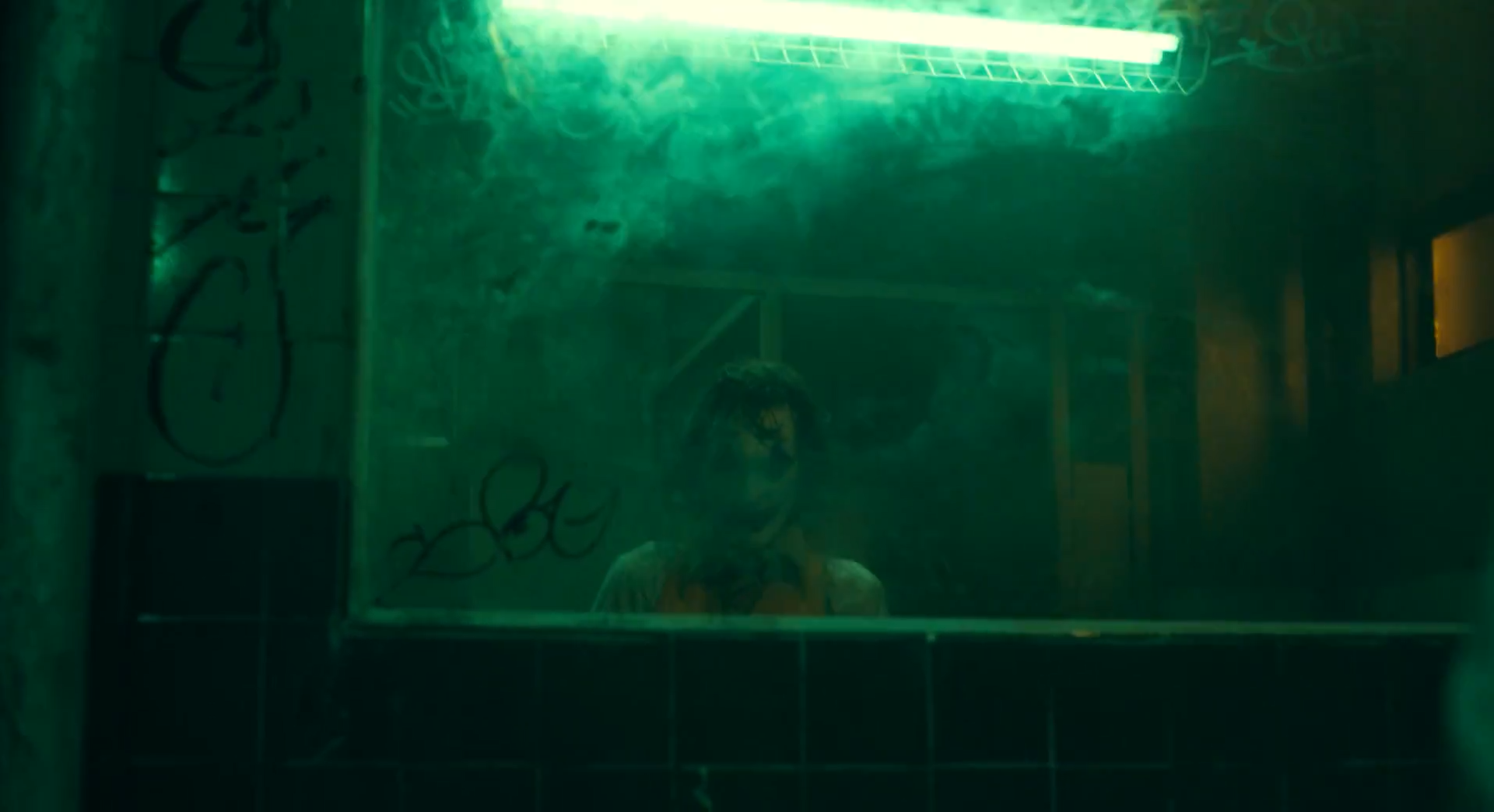
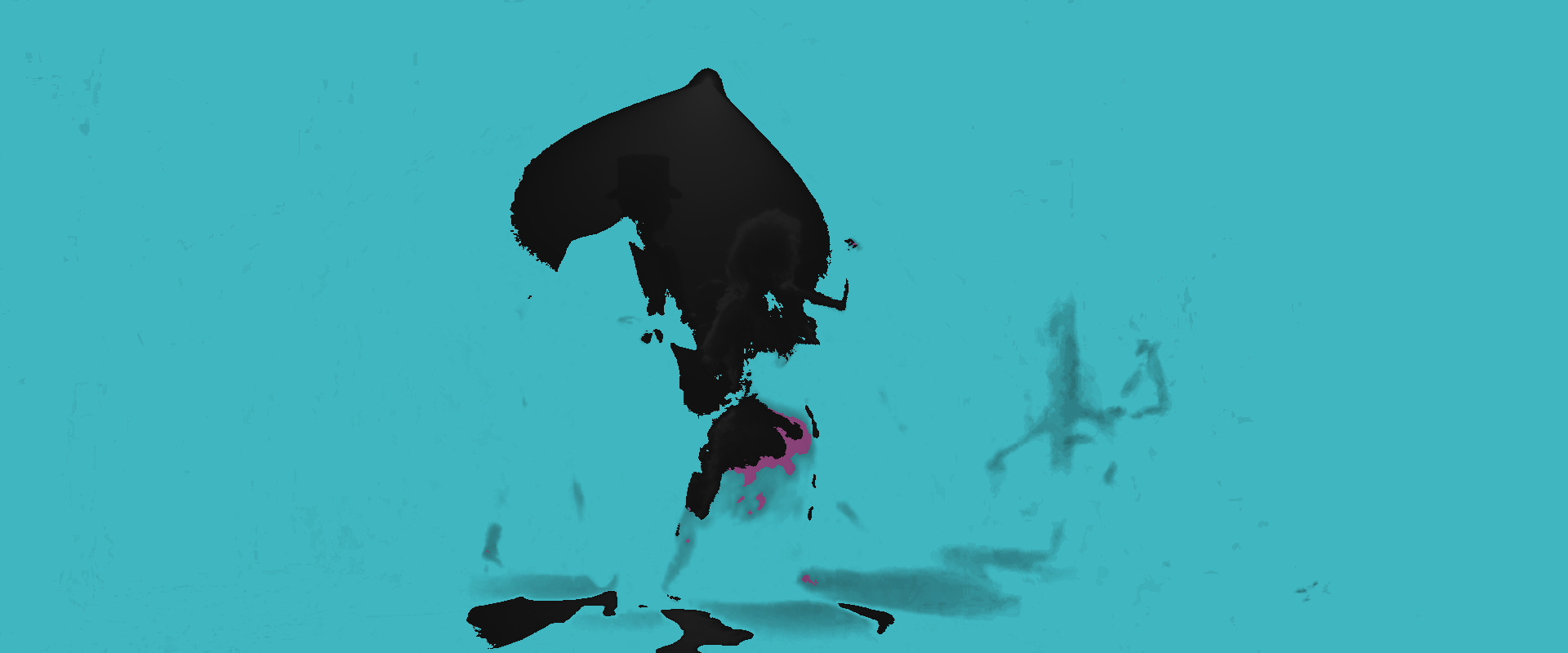
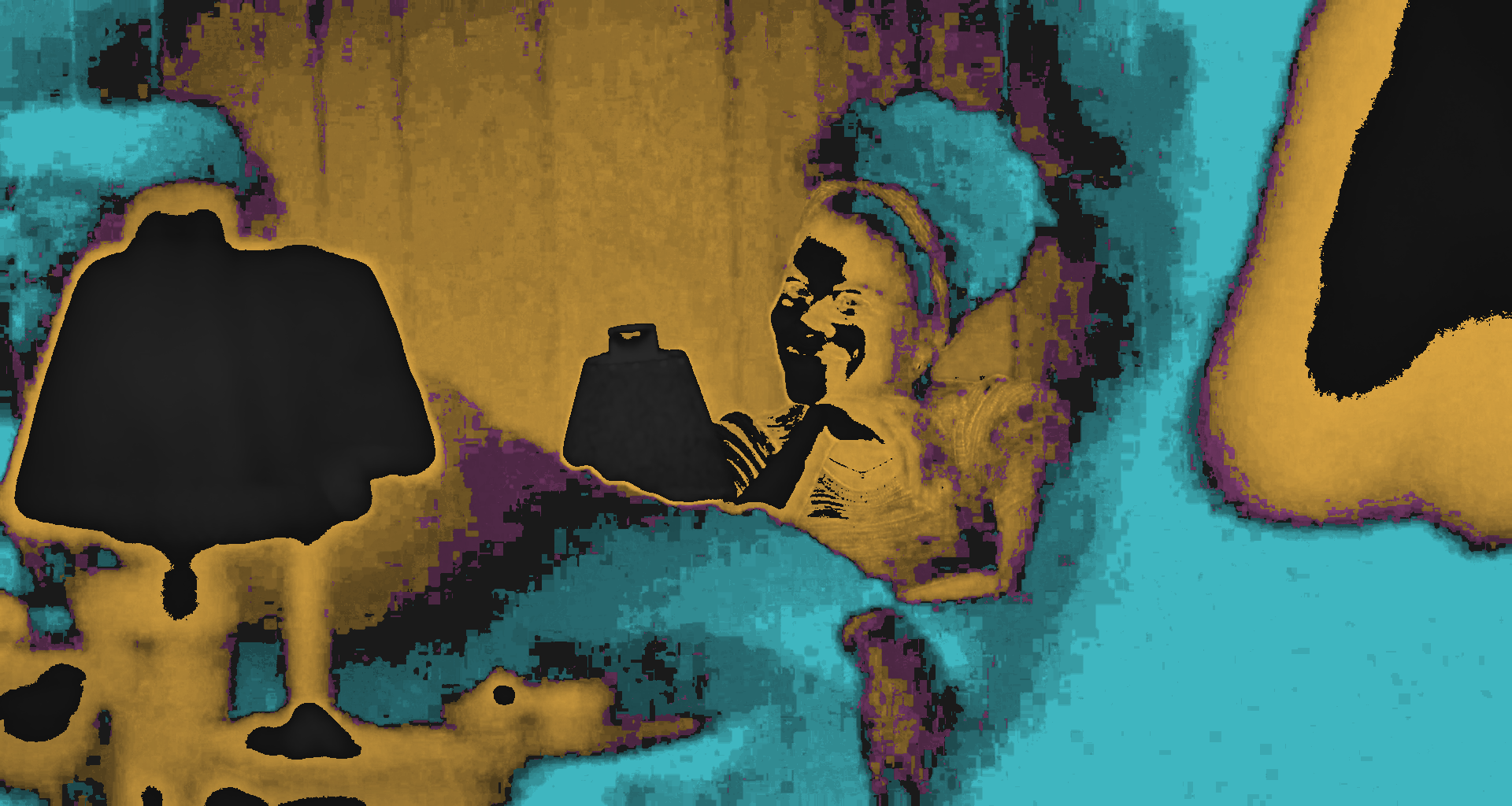
Green Mirror — Joker: Folie à Deux, shot 1160
Saturated by subtraction
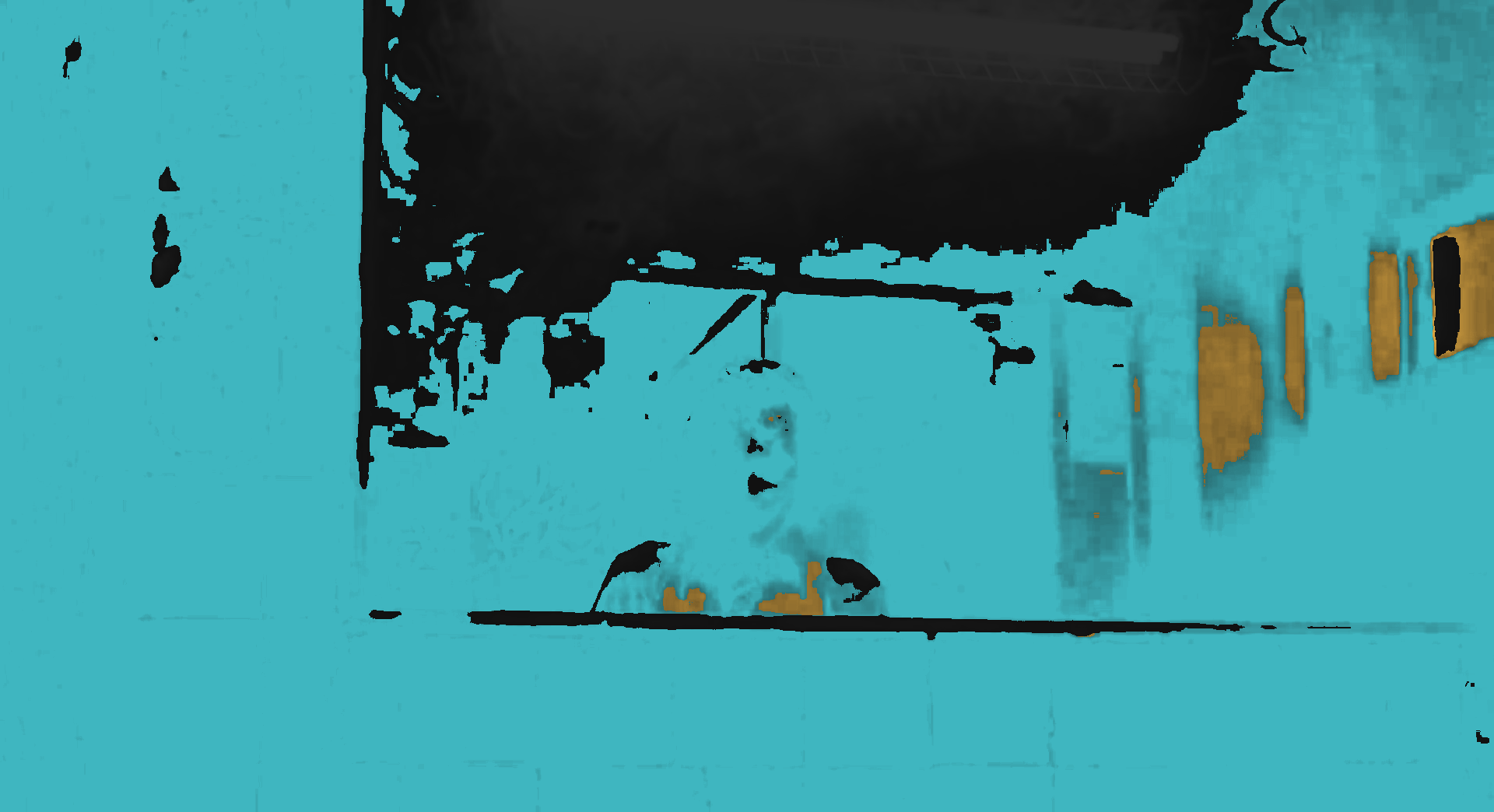
Green Mirror, painted by the channel that left — Joker: Folie à Deux, shot 1160
red lowest 99% · saturated toe 89%
Saturated by subtraction
Blue Spotlight, painted by the channel that left — The Bride!, shot 645
red lowest 100% · saturated toe 90%
Saturated by subtraction
Breaking point, the dark lifted — Joker, shot 717
red lowest 91%
Saturated by subtraction
Figure 3 · Cut three: which channel each film's dark gives up first
Each bar is one film's toe, divided by the channel lowest in each pixel: teal where red left first, rose where green did, ochre where blue did. Films run from most red-first to least; the four studied here are ruled heavy and the dashed ...
Cut four · at what depth
The deeper the pixel, the more often red is gone: in Folie à Deux red-first rises from about a third of pixels in the mids to nine in ten at the floor.
It happens on the way down
Figure 4 · Cut four: at what depth red leaves
Every measured pixel, pooled per film into bands of lightness, darkest at left. The hatched bed is the middle half of the other films and the dashed line their median; the engraved lines are the four films, named at their light end. The ...
The control · her fourth film
The Grand Budapest Hotel does not lose red at all. Where it loses anything unusual, it loses green, and its dark goes magenta-red.
Measured on: census.
Same colourist, another channel
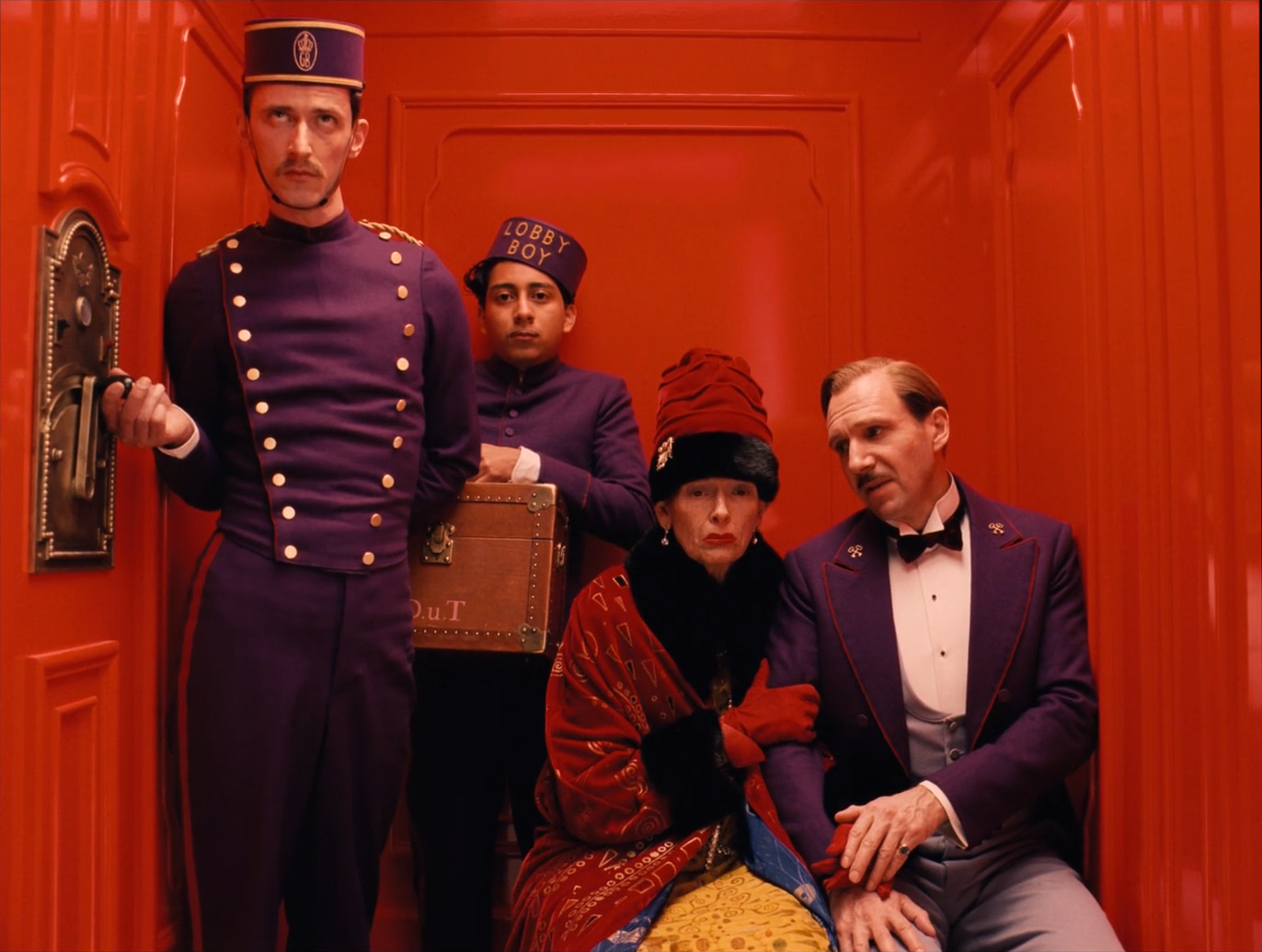
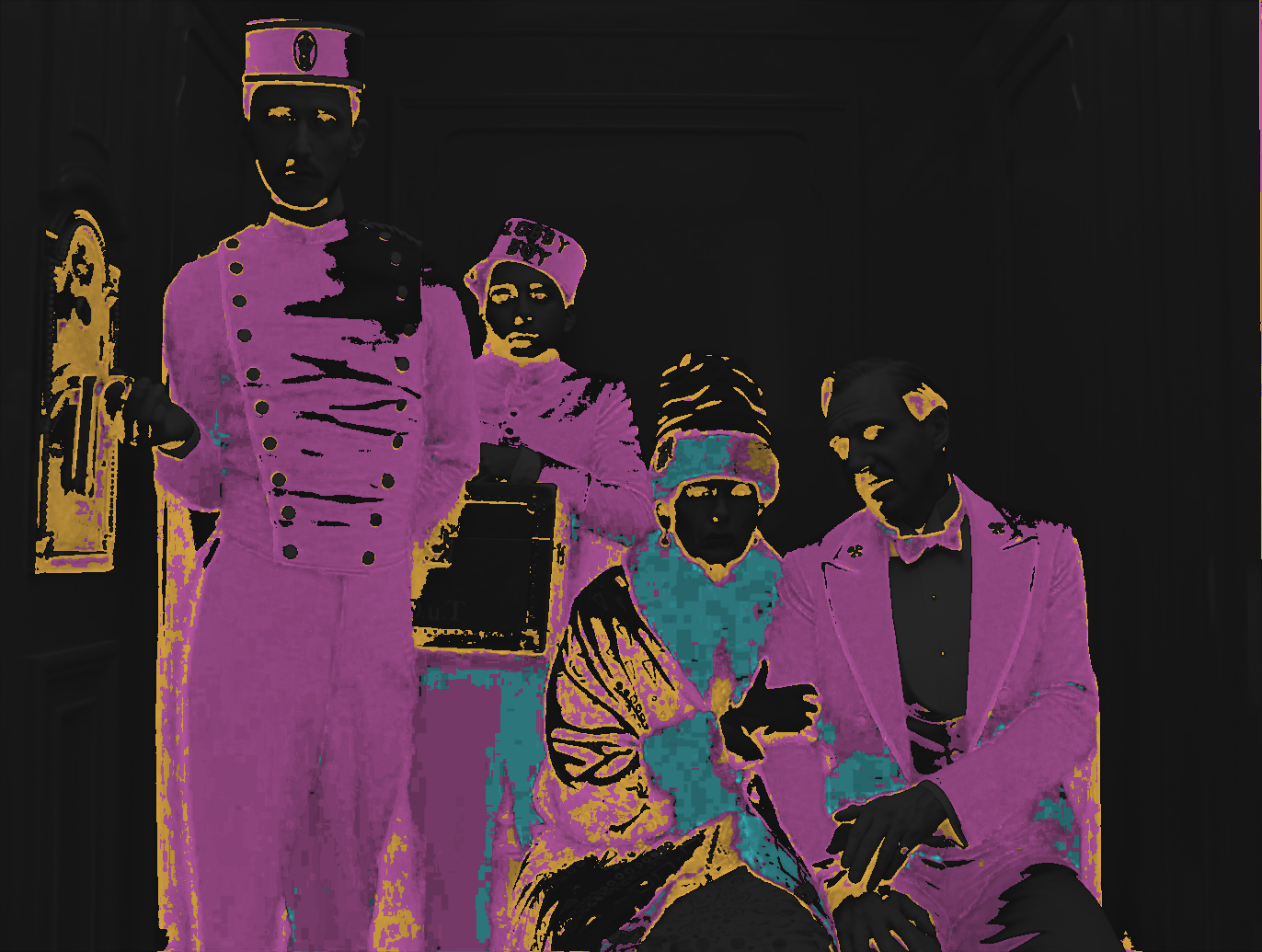
The Red Elevator — The Grand Budapest Hotel, shot 108
Same colourist, another channel
The Red Elevator, painted by the channel that left — The Grand Budapest Hotel, shot 108
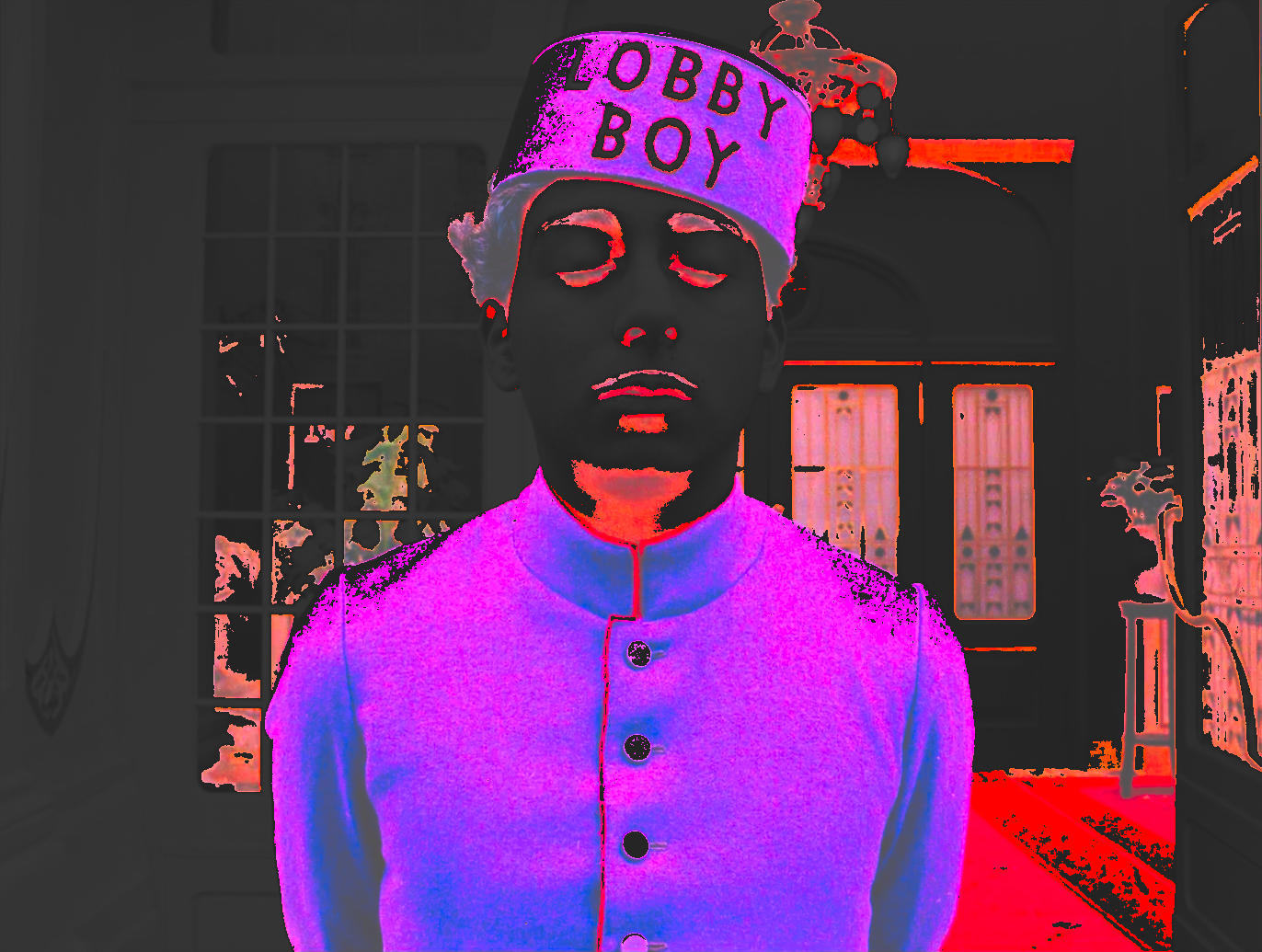
green lowest 83%
Same colourist, another channel
Lobby Boy, the dark lifted — The Grand Budapest Hotel, shot 117
green lowest 90%
Same colourist, another channel
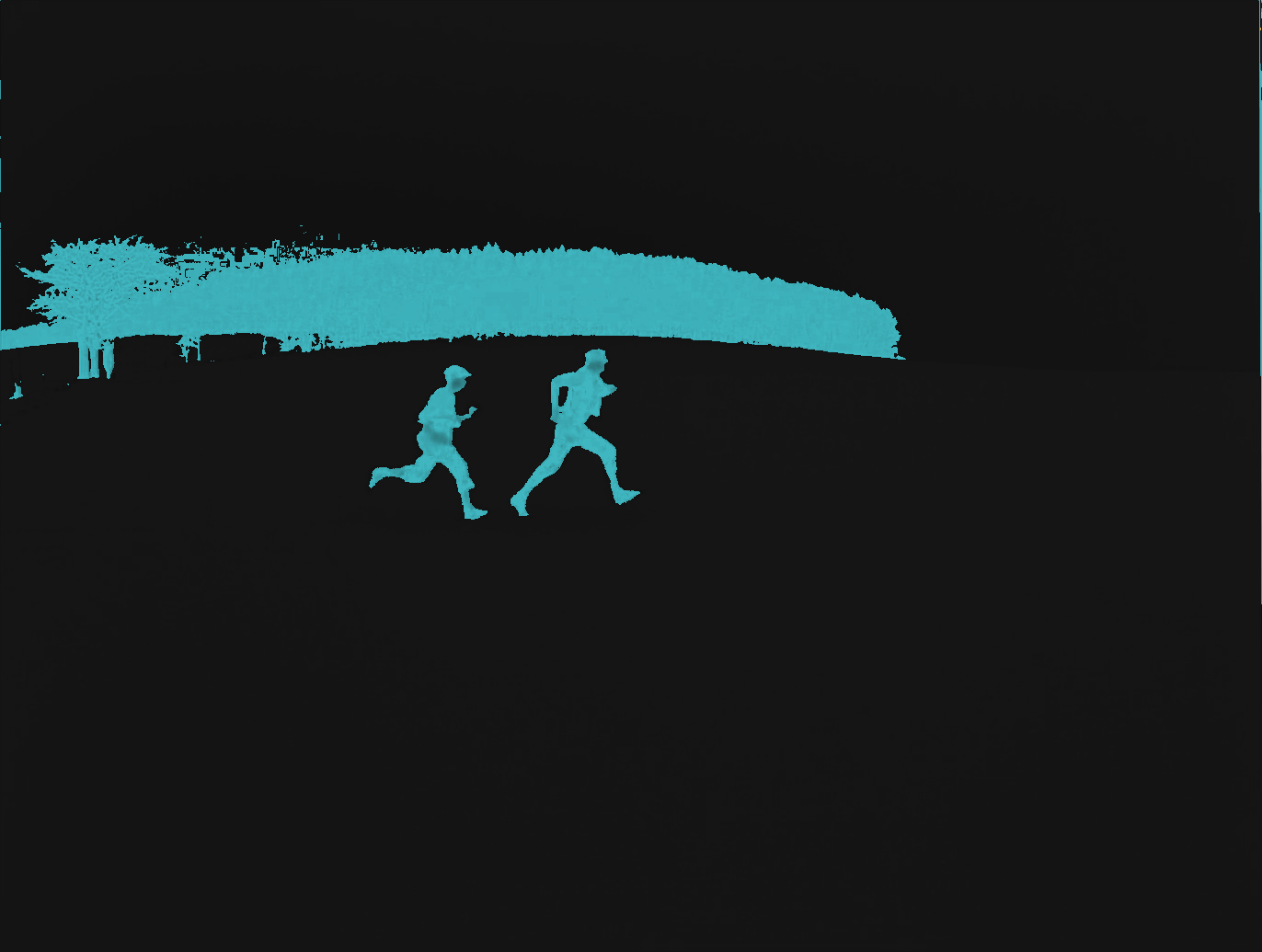
Running in the Snow, painted by the channel that left — The Grand Budapest Hotel, shot 699
red lowest 100%
Cut five · the rivals
The toe's hue is as coherent as any film's, and in Folie à Deux the red-first dark holds through every tenth of the running time; Joker and The Bride! switch with the scene.
Measured on: census.
Not noise, and not a few scenes
Red Lampshades, painted by the channel that left — Joker, shot 542
blue lowest 100%
Not noise, and not a few scenes
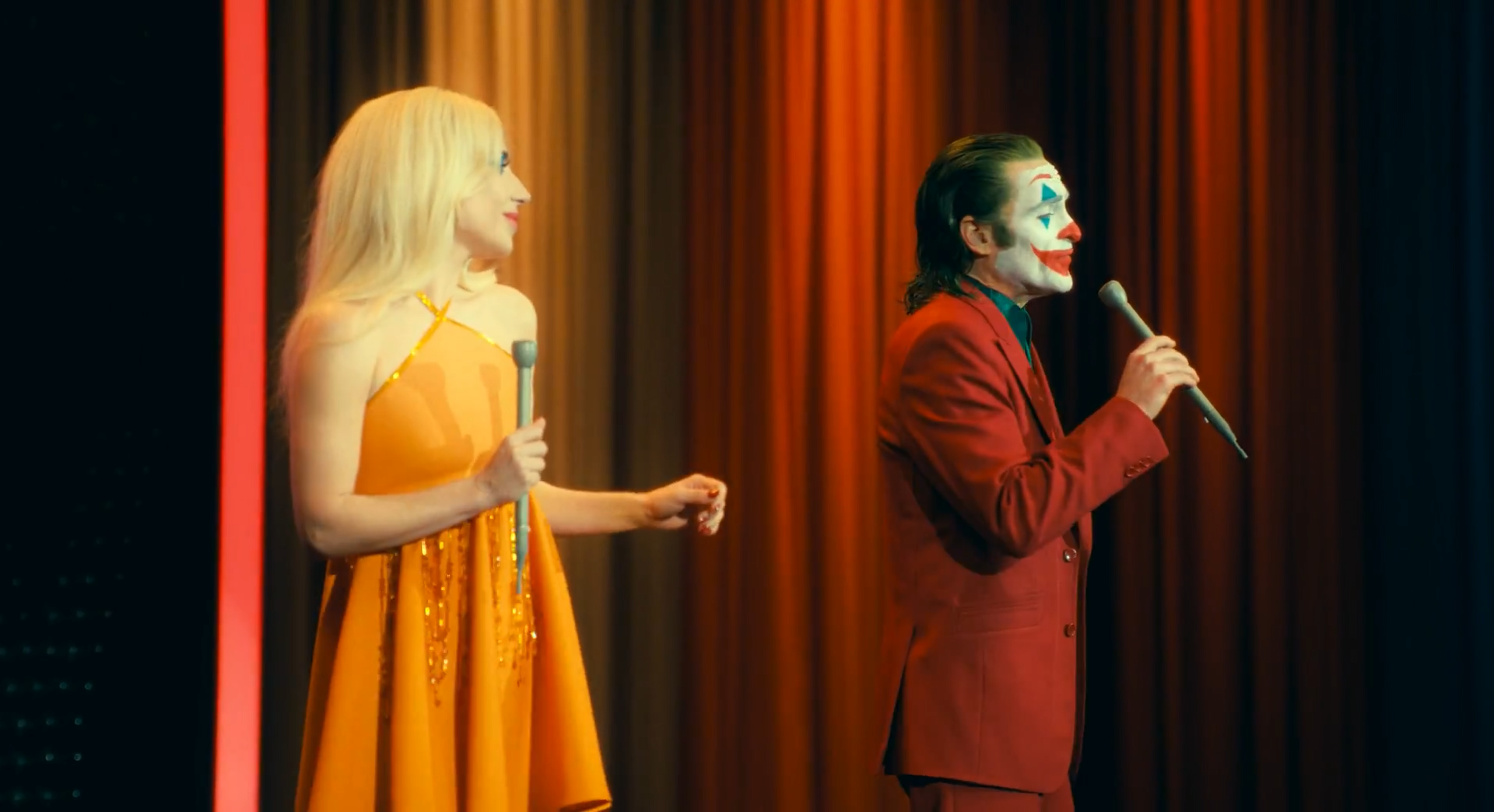
Stage Orange — Joker: Folie à Deux, shot 672
blue lowest 97%
Not noise, and not a few scenes
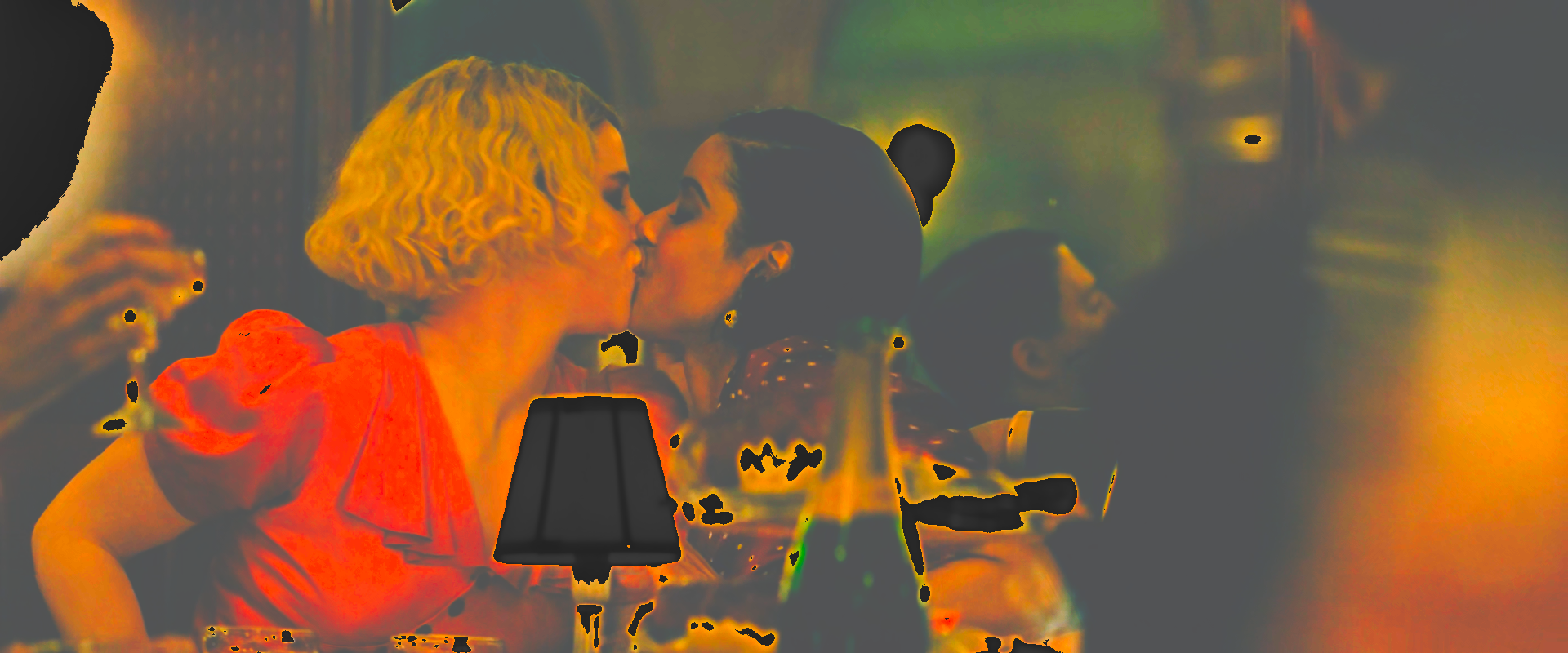
The Kiss by the Lamp, the dark lifted — The Bride!, shot 13
blue lowest 98%
Not noise, and not a few scenes
Figure 5 · Cut five: whether it holds through the film
Each film's running time as ten cells, read left to right: the median red-first share of the toe in that tenth, a heavy rule where it is over half. Folie à Deux is ruled end to end. Joker and The Bride! switch, as lighting would make the...
Cut six · what a film keeps
A saturated toe belongs to the film more than anything else measured here. It does not belong to one person: the films nearest Folie à Deux are not hers, and her fourth film does something else.
Measured on: census + documented.
What a film keeps, and whose it is
Figure 6 · Cut six: what a film keeps
For each measure, the share of its variation that lies between films rather than between shots of one film, with a 95% interval from 2,000 draws of whole films. The saturated toe is what films keep most; how much of the frame is dark and...
The record
The film on which Jill Bogdanowicz began, the first full digital intermediate, has the warmest kind of dark there is: blue is its lowest toe channel in every pixel.
Measured on: census + documented.
Cut seven · the better copy
Two of the four films were read again from 10-bit masters, frame for frame. The finding survives and sharpens: Folie à Deux's master is red-first in 85.5% of its toe and 32% fully saturated, against the 83% and 26% this report measured in its web copy.
Measured on: census.
The same frames, from a 10-bit master
Figure 7 · The same shots, from the master down to the web copy
Each film's median over every paired shot, rung by rung: the 10-bit master at the white its web copy implies, shown at 1080p, at 8 bits, with 4:2:0 colour, through x264 at the web copy's bitrate, and the web copy itself. The x264 rung is...
The answer
In these films the dark is coloured by taking a channel away, not by adding chroma — cyan where red goes, magenta where green goes — and the clearest case is the middle of one documented LUT line.
What would change it
How this was made, and what would change it
Every figure the prose quotes is declared with the path it came from in the measurements and re-verified at build time; a number that drifts fails the build. The figures read the same measurements, so none can disagree with the sentence beside it without the build noticing.