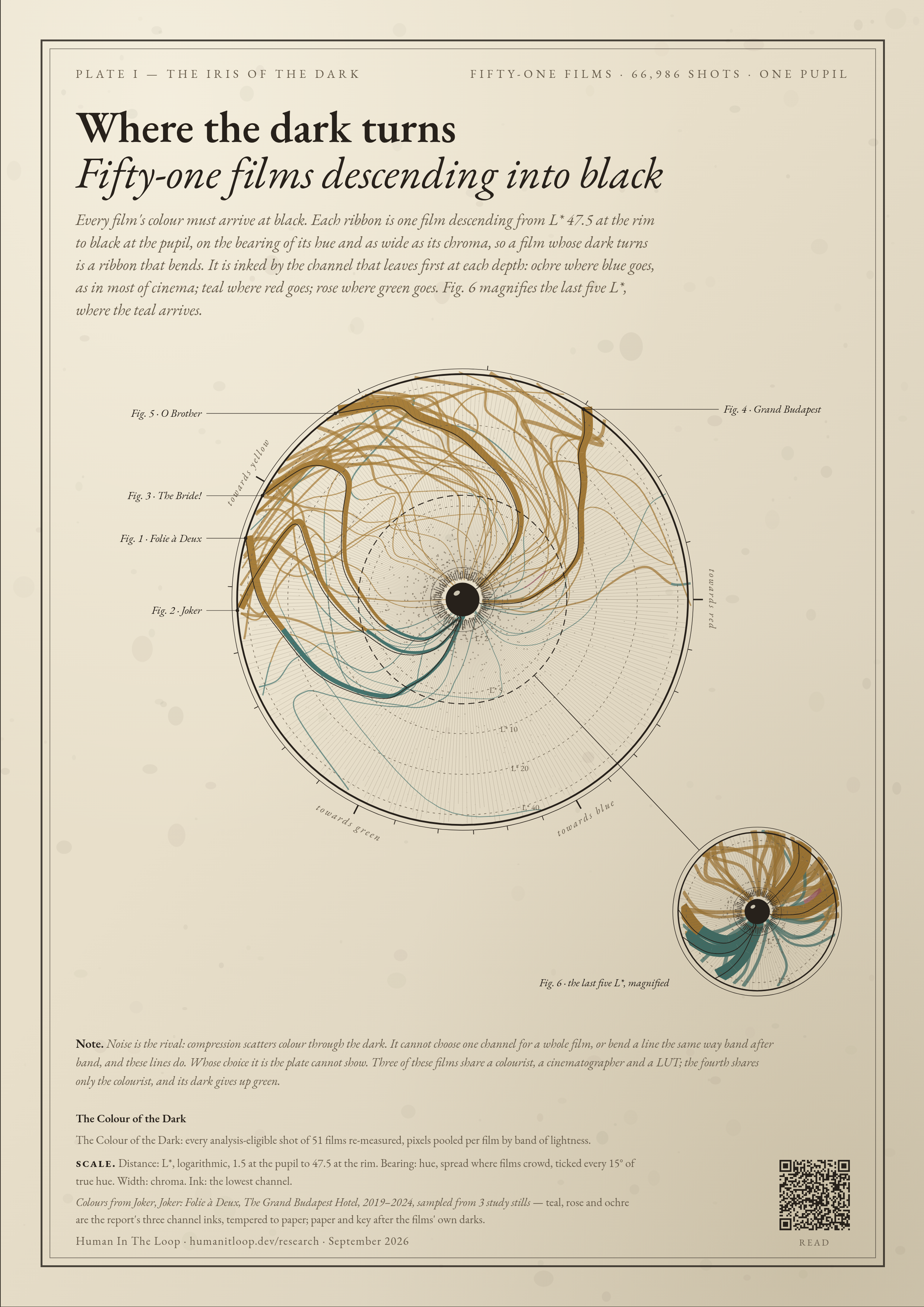
Plate I — The Iris of the Dark Fifty-one films · 66,986 shots · one pupil
Where the dark turns
Fifty-one films descending into black
Every film's colour must arrive at black. Each ribbon is one film descending from L* 47.5 at the rim to black at the pupil, on the bearing of its hue and as wide as its chroma, so a film whose dark turns is a ribbon that bends. It is inked by the channel that leaves first at each depth: ochre where blue goes, as in most of cinema; teal where red goes; rose where green goes. Fig. 6 magnifies the last five L*, where the teal arrives.
Note. Noise is the rival: compression scatters colour through the dark. It cannot choose one channel for a whole film, or bend a line the same way band after band, and these lines do. Whose choice it is the plate cannot show. Three of these films share a colourist, a cinematographer and a LUT; the fourth shares only the colourist, and its dark gives up green.